

Lotteries have long captured the public's imagination, offering the tantalizing prospect of instant wealth. At the heart of many lottery systems lies the lottery drawing machine, a device designed to ensure a fair and random selection of winning numbers. As a supplier of high - quality lottery drawing machines, I am often asked about the probability of winning a lottery when using such machines. In this blog, we will explore the concept of lottery probability, how lottery drawing machines contribute to the process, and some common misconceptions.
Understanding Lottery Probability
The probability of winning a lottery is determined by the total number of possible combinations in a given lottery game. For example, in a simple lottery where you need to pick 6 numbers from a pool of 49 numbers, the calculation of the number of possible combinations is based on the combination formula (C(n,r)=\frac{n!}{r!(n - r)!}), where (n) is the total number of available numbers and (r) is the number of numbers you need to pick.
In our 6 - out - of - 49 example, (n = 49) and (r=6). So, (C(49,6)=\frac{49!}{6!(49 - 6)!}=\frac{49!}{6!×43!}=\frac{49\times48\times47\times46\times45\times44}{6\times5\times4\times3\times2\times1}=13983816). This means that the probability of winning the jackpot in this lottery is (\frac{1}{13983816}). It is an extremely small probability, highlighting the fact that winning a major lottery jackpot is a very rare event.
The Role of Lottery Drawing Machines
Lottery drawing machines are crucial for maintaining the integrity of the lottery process. They are designed to generate random results, ensuring that each number has an equal chance of being selected. There are different types of lottery drawing machines available in the market, each with its own mechanism for generating randomness.
Balloon Lottery Machine
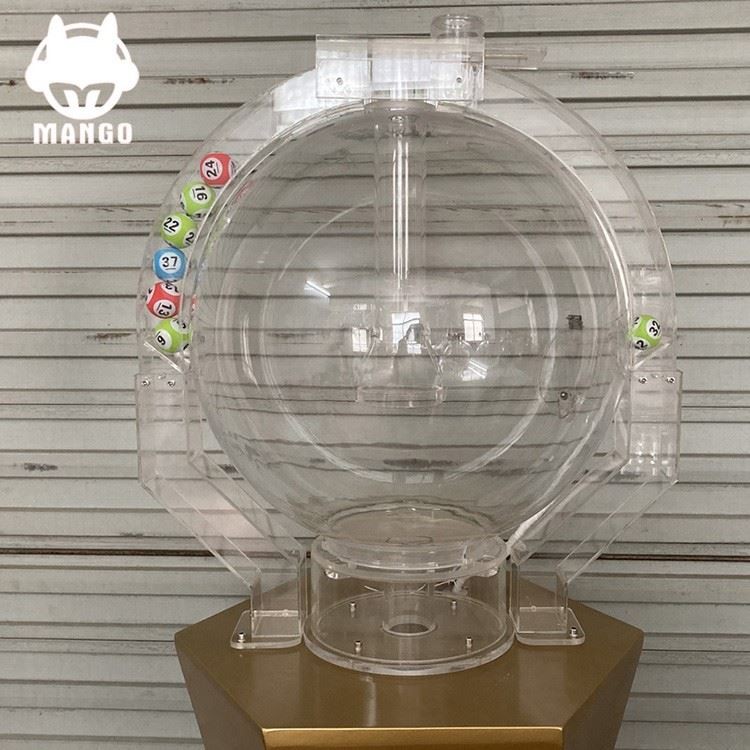
The Balloon Lottery Machine is a popular choice for many lotteries. In this type of machine, numbered balls are placed inside a large, transparent balloon - like chamber. The chamber is then rotated or agitated, causing the balls to mix thoroughly. When the drawing begins, a mechanism releases the balls one by one, ensuring a random selection. The physical nature of the mixing process in a balloon lottery machine helps to guarantee that the results are truly random, as each ball has an equal opportunity to be selected at any given time.
Drawing Lottery Machine
The Drawing Lottery Machine uses a different approach. It often consists of a series of compartments or tubes where the numbered balls are placed. A mechanical or electronic system is used to draw the balls from the compartments. These machines are designed to be highly reliable and precise, with built - in safeguards to prevent any form of manipulation. The randomness in a drawing lottery machine is achieved through the complex algorithms and mechanical operations that govern the ball - drawing process.
Intelligent Lottery Machine
The Intelligent Lottery Machine represents the latest advancement in lottery technology. These machines are equipped with advanced sensors, microprocessors, and software algorithms. They can perform self - checks to ensure proper functioning, and they can generate random numbers with a high degree of accuracy. Intelligent lottery machines can also be integrated with other lottery management systems, providing real - time data and analytics to lottery organizers.
Factors Affecting Lottery Probability
While lottery drawing machines are designed to generate random results, there are some factors that can influence the perceived probability of winning a lottery.

Multiple Draws
In a lottery with multiple draws over time, the probability of a particular set of numbers being drawn increases. However, it is important to note that each draw is an independent event. This means that the outcome of one draw has no bearing on the outcome of the next draw. For example, if a certain number has not been drawn in several consecutive draws, it does not mean that it is "due" to be drawn in the next draw. The probability of that number being drawn in each individual draw remains the same.
Number of Participants
The number of people participating in a lottery can also affect the perception of probability. In a lottery with a large number of participants, the chances of someone winning the jackpot increase. However, from an individual's perspective, the probability of that person winning remains the same. For example, if there are one million people playing a lottery with a one - in - ten - million chance of winning the jackpot, the overall probability of someone winning is higher than if only one person was playing. But for each individual player, the probability of winning is still (\frac{1}{10000000}).
Common Misconceptions about Lottery Probability
There are several common misconceptions about lottery probability that can lead people to make poor decisions when playing the lottery.
Hot and Cold Numbers
Some people believe in the concept of "hot" and "cold" numbers. Hot numbers are those that have been drawn frequently in the past, while cold numbers are those that have not been drawn for a long time. However, as mentioned earlier, each lottery draw is an independent event, and past results do not influence future draws. Therefore, the idea that hot numbers are more likely to be drawn or that cold numbers are "due" to be drawn is a fallacy.
Using Systems and Strategies
Many people try to develop systems or strategies for playing the lottery, such as using birth dates, anniversaries, or other significant numbers. While these numbers may hold personal significance, they have no impact on the probability of winning. The lottery drawing process is random, and no system or strategy can guarantee a win.
The Importance of Fairness in Lottery Draws
As a supplier of lottery drawing machines, we understand the importance of fairness in lottery draws. Our machines are designed and tested to meet the highest standards of randomness and reliability. We work closely with lottery organizers to ensure that their draws are conducted in a transparent and fair manner. By using our high - quality lottery drawing machines, lottery organizers can provide their players with the confidence that the results are truly random and that everyone has an equal chance of winning.
Conclusion
The probability of winning a lottery using a drawing machine is determined by the mathematical principles of probability and the nature of the lottery game itself. Lottery drawing machines play a crucial role in ensuring that the selection of winning numbers is fair and random. While the chances of winning a major lottery jackpot are extremely low, the allure of the lottery continues to attract millions of players around the world.
If you are a lottery organizer or an institution interested in ensuring the fairness and integrity of your lottery draws, we invite you to contact us for more information about our range of lottery drawing machines. Our team of experts is ready to assist you in selecting the right machine for your needs and providing you with the support and service you deserve.
References
- Grinstead, C. M., & Snell, J. L. (1997). Introduction to Probability. American Mathematical Society.
- Ross, S. M. (2014). A First Course in Probability. Pearson.