

As a supplier of air mixing lottery machines, I often receive inquiries about various aspects of our products. One question that comes up quite frequently is, "What is the noise level of an air mixing lottery machine?" In this blog post, I'll delve into this topic, providing you with a comprehensive understanding of the noise associated with these machines and why it matters.
Understanding the Air Mixing Lottery Machine
Before we discuss the noise level, let's briefly understand what an air mixing lottery machine is. An Air Mixed Lottery Machine is a specialized device used in lottery operations. It uses air to mix numbered balls thoroughly, ensuring a fair and random selection of winning numbers. These machines are commonly used in different lottery games around the world, from small - scale local lotteries to large - scale national ones.
The basic components of an air mixing lottery machine include a transparent chamber where the balls are placed, an air - blowing system, and a mechanism to draw the balls. The air - blowing system is responsible for creating a turbulent flow within the chamber, which mixes the balls effectively. When it comes to noise, this air - blowing system is the primary source.
Factors Affecting the Noise Level
Several factors contribute to the noise level of an air mixing lottery machine. The most significant one is the power of the air - blowing system. A more powerful blower can generate a stronger airflow, which is necessary for thorough mixing of the balls. However, a stronger blower also tends to produce more noise.
The design of the machine's enclosure also plays a crucial role. A well - designed enclosure can dampen the noise produced by the blower and other moving parts. Materials used in the enclosure, such as sound - absorbing foams or thick plastics, can reduce the amount of noise that escapes from the machine.

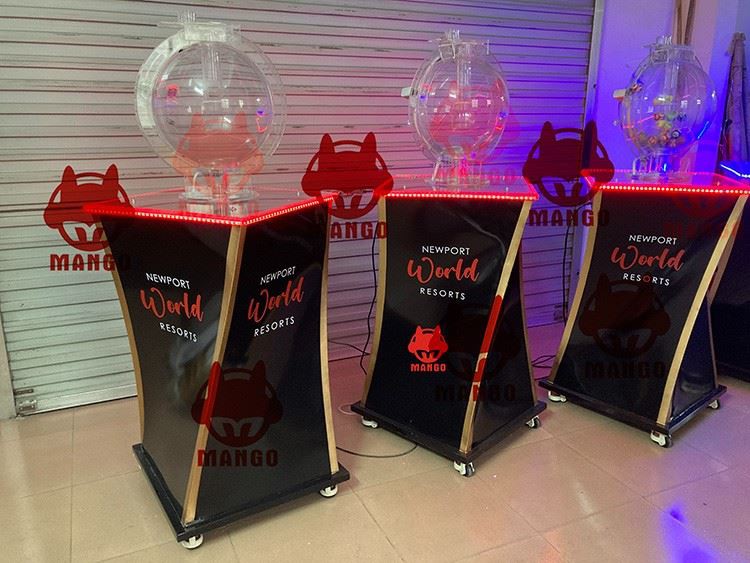
The size of the machine can also influence the noise level. Larger machines may have more space to accommodate noise - reducing features, while smaller machines might be more compact and have less room for such measures. Additionally, the number of balls in the chamber can affect the noise. More balls may create more friction and noise as they collide with each other during the mixing process.
Measuring the Noise Level
The noise level of an air mixing lottery machine is typically measured in decibels (dB). A decibel is a unit used to express the intensity of a sound. In a quiet environment, the background noise level is usually around 30 - 40 dB. Normal conversation is about 60 dB, and a vacuum cleaner can produce noise levels of around 70 - 80 dB.
For air mixing lottery machines, the noise level can vary depending on the factors mentioned above. On average, a standard air mixing lottery machine may produce noise levels in the range of 60 - 80 dB. However, some high - performance machines with powerful blowers may reach up to 90 dB or more.
It's important to note that prolonged exposure to noise levels above 85 dB can cause hearing damage. Therefore, if the lottery machine is used in an environment where people are present for extended periods, it's crucial to ensure that the noise level is within a safe range.
Why the Noise Level Matters
The noise level of an air mixing lottery machine is not just a matter of comfort; it can also have practical implications. In a lottery venue, excessive noise can be a distraction for both the staff and the players. It can make it difficult for people to communicate, and it may even affect the overall atmosphere of the place.
From a regulatory perspective, there may be noise limits in certain areas. For example, in some urban areas, there are strict regulations regarding the noise levels of commercial equipment. If a lottery machine exceeds these limits, it may lead to legal issues for the lottery operator.
Moreover, a noisy machine may give the impression of being of low quality. Customers are more likely to trust and prefer a lottery machine that operates quietly and smoothly. A quiet machine also reflects positively on the professionalism of the lottery organization.
Our Approach to Noise Reduction
As a supplier of air mixing lottery machines, we understand the importance of noise reduction. We have invested a significant amount of time and resources in research and development to design machines that operate quietly without compromising on performance.
Our engineers have worked on optimizing the air - blowing system. By using advanced blower technology, we have been able to achieve a good balance between airflow and noise. We have also experimented with different enclosure designs and materials. Our enclosures are made of high - quality plastics and incorporate sound - absorbing materials to minimize noise leakage.
In addition to the hardware design, we also offer Lottery Machine Software that can be customized to control the operation of the machine. The software allows for precise control of the blower speed, which can be adjusted according to the specific requirements of the lottery game. This not only helps in reducing noise but also improves the overall efficiency of the machine.
Comparing with Other Types of Lottery Machines
When considering the noise level, it's also useful to compare air mixing lottery machines with other types of lottery machines, such as Automatic Lottery Machine. Automatic lottery machines use different mechanisms, such as mechanical arms or rotating drums, to select the winning numbers.
In general, automatic lottery machines tend to be quieter than air mixing lottery machines. This is because they don't rely on a powerful air - blowing system. However, air mixing lottery machines have the advantage of providing a more random and fair selection of numbers due to the thorough mixing of the balls.
The choice between an air mixing lottery machine and an automatic lottery machine often depends on the specific needs of the lottery operator. If noise is a major concern and the randomness can be achieved through other means, an automatic lottery machine may be a better option. On the other hand, if a high level of randomness is required, an air mixing lottery machine, despite its relatively higher noise level, may be the preferred choice.
Conclusion
In conclusion, the noise level of an air mixing lottery machine is an important aspect that needs to be considered. It can be affected by various factors such as the power of the air - blowing system, the design of the enclosure, and the size of the machine. On average, these machines produce noise levels in the range of 60 - 80 dB, but this can vary.
As a supplier, we are committed to providing high - quality air mixing lottery machines with reduced noise levels. Our machines are designed to meet the needs of lottery operators while ensuring a comfortable and professional environment.
If you are in the market for an air mixing lottery machine or have any questions about our products, we invite you to contact us for a detailed discussion. We are ready to assist you in finding the best solution for your lottery operations.
References
- "Handbook of Noise Measurement" by Gen Rad.
- "Acoustics: Sound Fields, Transducers and Vibration" by Malcolm J. Crocker.