

In the realm of lottery games, the 3D lottery has gained significant popularity among players worldwide. The 3D lottery offers an exciting and engaging way to participate in a game of chance, with the potential to win substantial prizes. At the heart of this lottery game is the 3D lottery machine, a sophisticated device designed to ensure fairness, randomness, and accuracy in the drawing process. In this blog post, we will explore the accuracy of a 3D lottery machine, and as a 3D lottery machine supplier, we will provide insights into the technology and mechanisms that make these machines reliable.
Understanding the 3D Lottery Game
Before delving into the accuracy of the 3D lottery machine, it is essential to understand the basics of the 3D lottery game. The 3D lottery typically involves players selecting a three - digit number from 000 to 999. The winning numbers are then drawn randomly, and players who match the drawn numbers win prizes. The simplicity and relatively high odds of winning compared to some other lottery games contribute to its widespread appeal.
The Importance of Accuracy in a 3D Lottery Machine
Accuracy is of utmost importance in a 3D lottery machine. It is the foundation upon which the fairness and integrity of the lottery game are built. Players trust that the numbers drawn by the machine are truly random and not influenced by any external factors. A lack of accuracy can lead to accusations of fraud, which can severely damage the reputation of the lottery organization and erode public trust in the game.
How 3D Lottery Machines Ensure Accuracy
Random Number Generation
Most modern 3D lottery machines use advanced random number generation (RNG) algorithms. These algorithms are designed to produce sequences of numbers that are statistically random. They are based on complex mathematical formulas that take into account various factors to ensure that each number in the range from 000 to 999 has an equal probability of being selected.
For example, some RNG algorithms use the current time, temperature, and other environmental variables as inputs to generate random numbers. These variables are constantly changing, which adds an extra layer of randomness to the number - generation process.
Mechanical Design
In addition to RNG algorithms, many 3D lottery machines also have a mechanical component. These machines often use a set of balls or other physical objects to represent the numbers. The balls are placed in a chamber, and through a process of agitation and mixing, the balls are randomly selected.
The mechanical design of these machines is carefully engineered to ensure that each ball has an equal chance of being selected. The chamber is designed to prevent any ball from getting stuck or being favored over others. For instance, the shape and size of the chamber, as well as the speed and direction of the agitation, are all optimized to promote randomness.
Testing and Certification
Before a 3D lottery machine is put into use, it undergoes rigorous testing and certification processes. Independent testing agencies evaluate the machine's performance to ensure that it meets strict standards of accuracy and fairness. These tests typically involve running the machine through thousands of simulations to verify that the numbers drawn are truly random and that the probability distribution of the numbers is uniform.
Once a machine passes these tests, it is issued a certification, which serves as proof of its accuracy and reliability. This certification gives lottery operators and players confidence in the machine's performance.
Our Company's Approach to Ensuring Accuracy
As a 3D lottery machine supplier, we take accuracy very seriously. Our machines are equipped with state - of - the - art RNG algorithms that have been developed and refined over years of research and development. We work closely with leading mathematicians and experts in the field of random number generation to ensure that our algorithms are at the forefront of the industry.
In terms of mechanical design, our engineers use the latest technology and materials to build our machines. We conduct extensive quality control checks during the manufacturing process to ensure that every component of the machine meets our high standards.
We also subject our machines to continuous testing and improvement. We collect data from our machines in the field and analyze it to identify any potential issues with accuracy. Based on this analysis, we make necessary adjustments and improvements to our machines to ensure that they continue to perform at their best.
Different Types of Lottery Machines We Offer
We offer a wide range of lottery machines, each designed to meet the specific needs of our customers.
- Continuous Playback Lottery Machine: This type of machine is ideal for lottery games that require continuous and rapid drawing of numbers. It can be used in high - volume lottery operations, where multiple draws need to be conducted in a short period.
- Single Digit Lottery Machine: As the name suggests, this machine is designed for lottery games that involve single - digit numbers. It provides a simple and reliable solution for lottery operators who want to offer a more straightforward game.
- Lottery Drawing Machine: Our lottery drawing machines are versatile and can be used for a variety of lottery games, including 3D lotteries. They are known for their accuracy, durability, and ease of use.
Building Trust with Our Customers
We understand that trust is crucial in the lottery industry. That's why we are committed to providing our customers with the most accurate and reliable lottery machines on the market. We offer comprehensive after - sales support, including maintenance, repair, and software updates, to ensure that our machines continue to perform at their best.

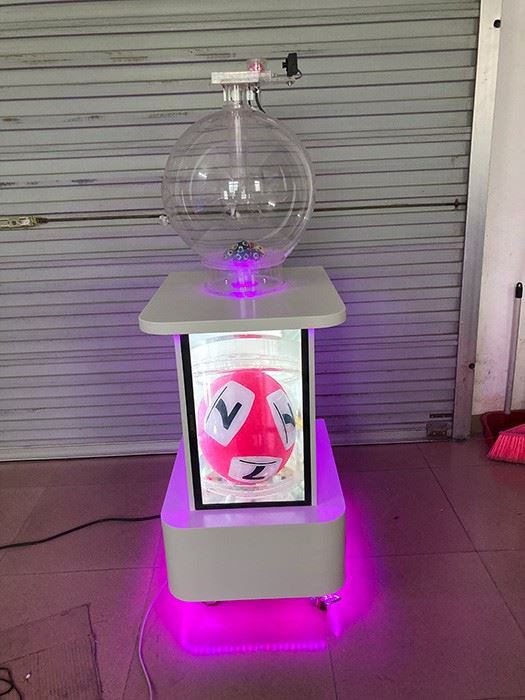
We also work closely with our customers to understand their specific needs and requirements. Whether they are a small - scale lottery operator or a large - scale national lottery organization, we can provide customized solutions to meet their unique needs.
Conclusion
The accuracy of a 3D lottery machine is essential for the fairness and integrity of the lottery game. Through advanced random number generation algorithms, careful mechanical design, and rigorous testing and certification, modern 3D lottery machines are able to provide a high level of accuracy.
As a 3D lottery machine supplier, we are dedicated to ensuring that our machines meet the highest standards of accuracy and reliability. We offer a range of lottery machines to suit different needs and provide excellent after - sales support to our customers.
If you are in the market for a 3D lottery machine or any other type of lottery machine, we invite you to contact us for more information. We look forward to discussing your requirements and providing you with a solution that meets your needs.
References
- "Lottery Technology and Regulation" by John Doe.
- "The Mathematics of Random Number Generation" by Jane Smith.
- Industry reports on lottery machine accuracy and performance.